Ingredients
for the yeast
7g fast-action yeast, like Saf Levure Active Dried Yeast
50g warm water
for the dough
500g Mulino Marino Organic Type "0" Manitoba Flour
250g cold water
150g sourdough starter, ideally white mixed 1:1 flour/water
5g light, dark or extra dark spraymalt (Depending on how dark you prefer it)
20g olive oil
10g fine sea salt
30g cold water, extra
extra olive oil and salt flakes to finish
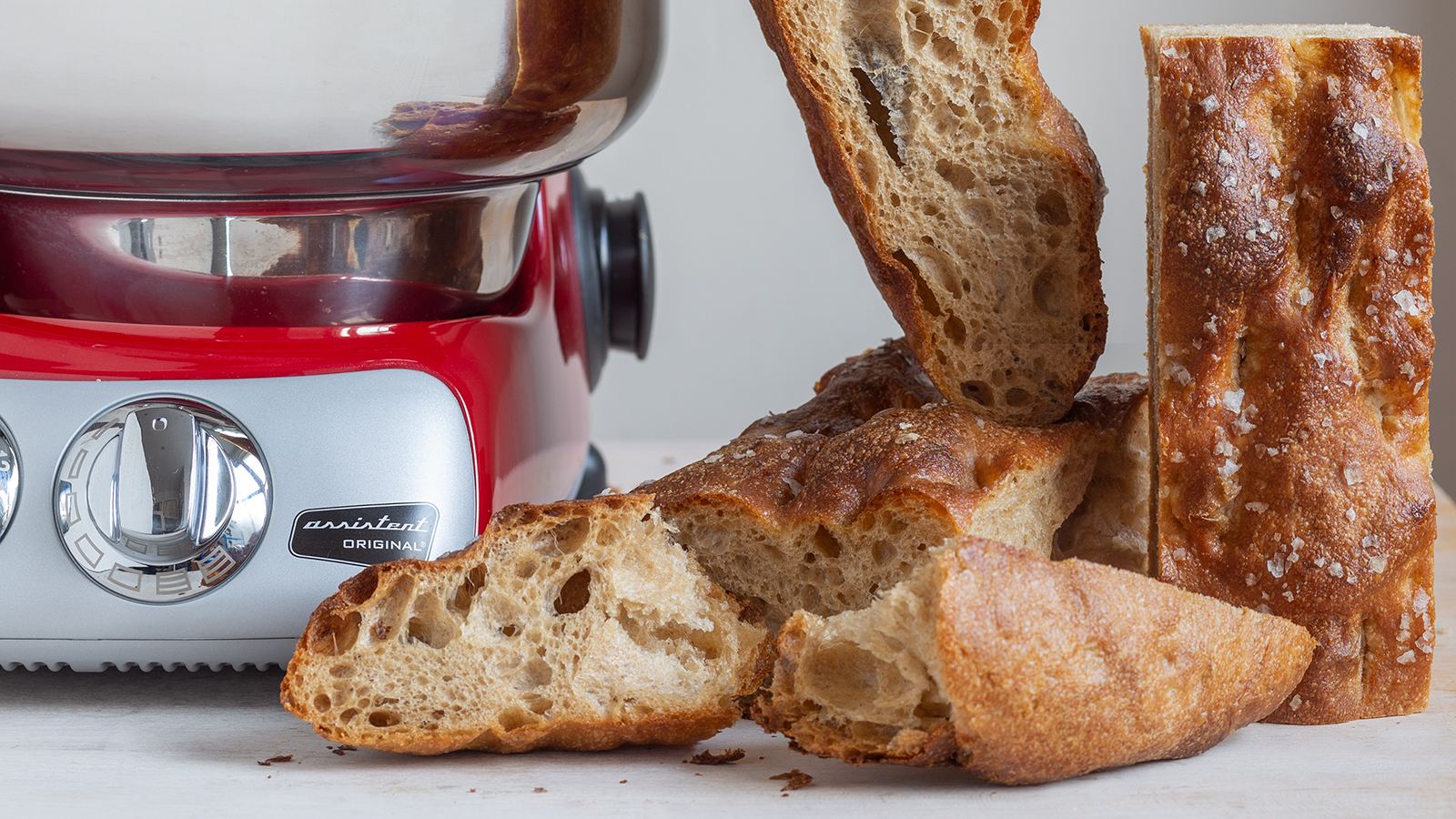
With its caramel coloured crumb and an open bubbly texture, this malted focaccia is relatively easy to make by hand but super-easy with a machine. Here I mixed this in the Ankarsrum Assistent with the dough hook attachment and scraper, but you can mix it by hand in a Swedish stainless steel mixing bowl. The flour used, Mulino Marino's excellent Organic Type "0" Manitoba Flour gave it an extra-crisp crust and a beautiful flavour.
If you’re making the dough by hand use relatively warm water (22C), but if you’re making the dough in a machine use much colder water (around 10-12C) as the action of the dough hook and the relatively long mixing will warm the dough quickly.
Make one large thick sheet of focaccia, or two thinner ones.
Method
Dissolve the yeast in the warm water. Then add this with the flour, 250g cold water (save the 30g extra water for later), sourdough starter, malt flour and olive oil to the mixer bowl. Mix on first or the lowest speed for 3-4 minutes until almost combined, then increase the speed to 2-3 and mix for about 10 minutes until the dough is quite smooth elastic (stop the machine and scrape the dough down from the top of the dough hook if it twists up).
Next add the salt, and gradually the water in 2-3 slurps, and mix until the dough is very smooth and elastic (almost like chewing gum). I found that removing the dough scraper from the Ankarsrum at this point made it much easier to achieve this dough consistency, in about 5 minutes additional mixing.
Remove the dough from the mixer’s bowl and place in a lightly oiled container to rise: with the Ankarsrum remove the dough hook and scraper first, then it’s super easy to lift the dough and bowl out to do this. Cover and leave to rise for 90 minutes.
Give the dough a stretch and fold on an oiled surface (I use an oiled tray, with a damp cloth folded and placed under it on the worksurface to stop it wobbling) then return the dough to the container leave the dough a further 70-90 minutes until almost doubled in volume.
Get a baking tray and place a sheet of non-stick paper on it that covers the surface edge-to-edge. Lightly oil the paper, and a few dabs of oil under the paper will stop it from moving. Stretch and fold the dough once more, as before, then place it in the centre of the paper. Cover and leave to rise for 20-60 minutes, then oil the top of the dough and dimple it outward to almost reach the edges of the trays.
Heat the oven to 220C fan. Leave the dough to rise for 30 minutes more, then sprinkle with sea salt flakes and bake for about 30 minutes until a rich brown colour on top and well risen. Remove from the oven, drizzle with a little more olive oil while hot then leave to cool.